Blog 2 – Trauma: Inside the Human Body at the Museum of Science and Industry
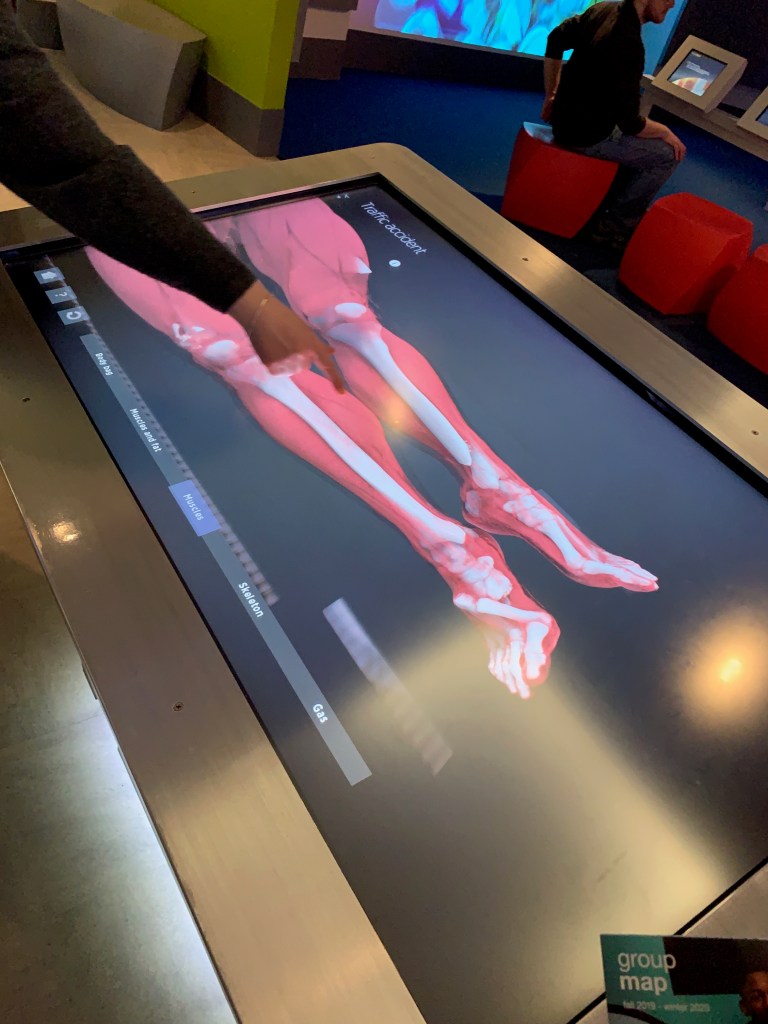
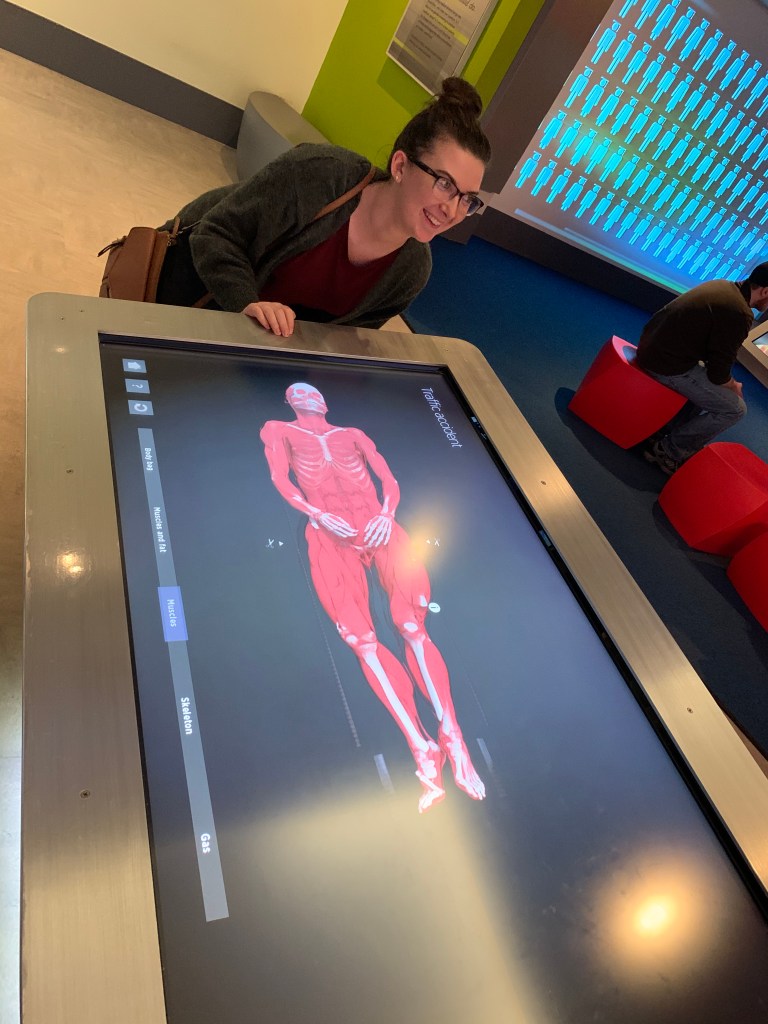
This weekend a large group from our MST program here at WIU went on a bus trip to the Museum of Science and Industry in Chicago. While at the museum we witnessed a lot of new and interesting tech that the museum has implemented into their exhibit space. The piece of tech that caught my attention was located on the third floor of the museum in the You! The Experience exhibit. Tucked into a room away from the main exhibit rested an oversized touch screen (think large Ipad) that was over 5 feet long by 2 feet long. This exhibit was called “Trauma: Inside the Human Body” and was installed in the museum at the end of 2019. This exhibit did not have any physical objects going with it – the entire exhibit was this interactive screen of which you could change what was being displayed. The purpose of the exhibit was for visitors to see the aftermath of the human body after going through traumatic events. There were four different scenarios to choose from: a traffic accident, a seizure, a brain aneurysm, and someone who had died due to old age. All of the different scenarios were fatal to the human. After choosing your scenario the visitor has a multitude of different things they can do. The visitor can zoom in, crop, remove layers of the body (down to the tissue or veins), and see a recreation of the body going through the scenario. The interactive allows the visitor exactly what happens to almost all portions of the body when going through a traumatic event (such as a car accident). This tech was particularly interesting to me because I had never seen an exhibit that allowed the visitor to go through, frame by frame, what happened to the deceased body as they were in a traffic accident. You could literally see the various broken bones, broken tissue, and torn muscle of the individual as if you had a real time special x-ray machine. This exhibit took an “Ipad level” interactive to a new level for me as this gave such immense detail that was not available in any other touch screen interactive I have seen before. If I had to describe this exhibit to someone who has not seen it before I would describe it as “If you were witnessing the car accident and the immediately seeing detailed autopsy photos and findings.” Overall, this piece of tech was very advanced and was pushing the boundaries of what we know as the classic touch screen interactive within museums.
 The Most Interesting Tech in the World